The thirty-second version
Miniatures strategy where gravity does the damage.
Finally, a strategy game where knocking things over counts as planning.
On paper alone, Table Tactics replaces invisible arithmetic with visible consequences, and that's a real design idea. Weight, shape, position and momentum decide whether a miniature stays upright, giving every move the clarity of a tabletop stunt and the possibility of an unexpected chain reaction. The Descent guy called it before the trailer ended.
Okay, what is this thing?
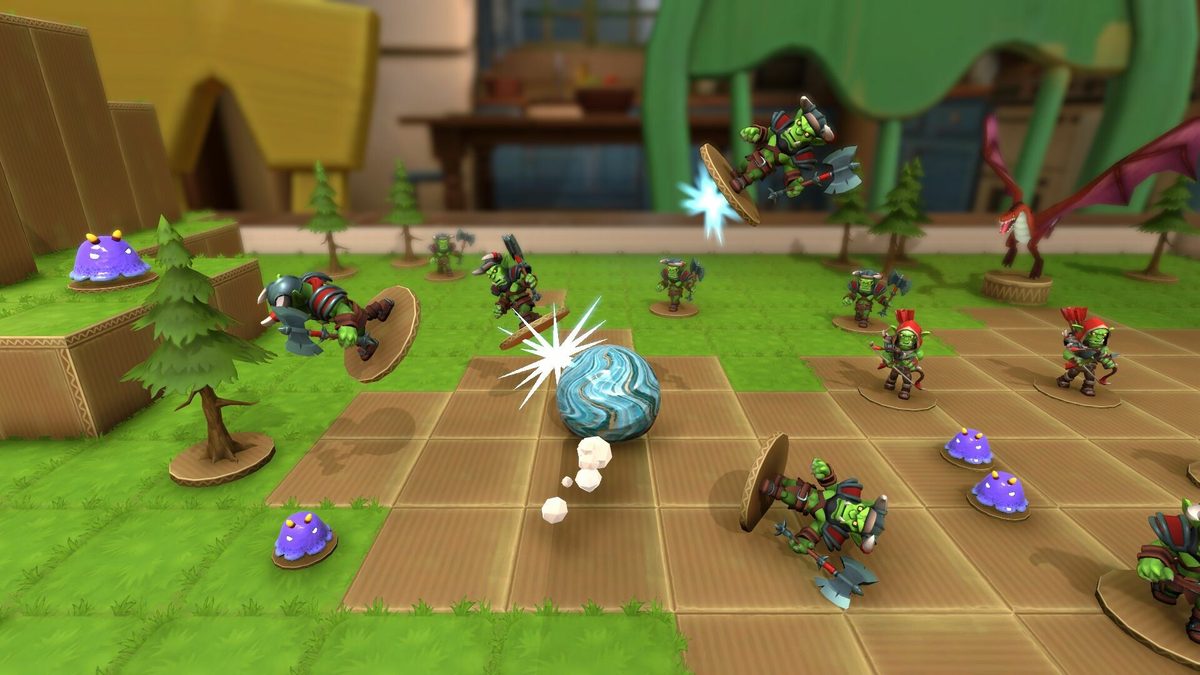
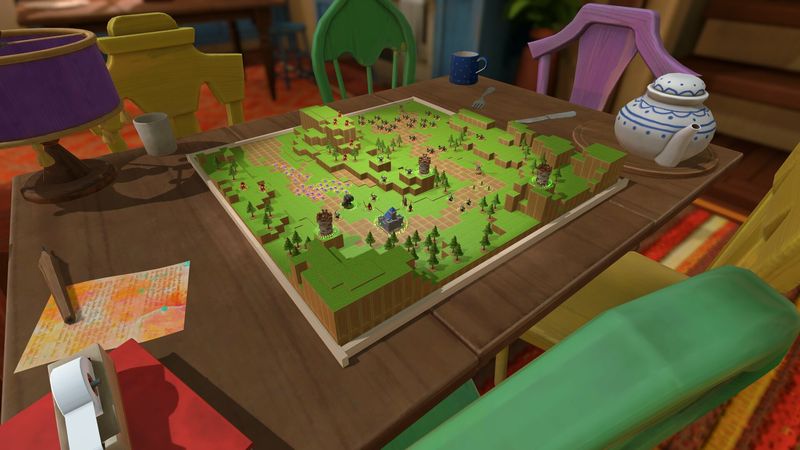
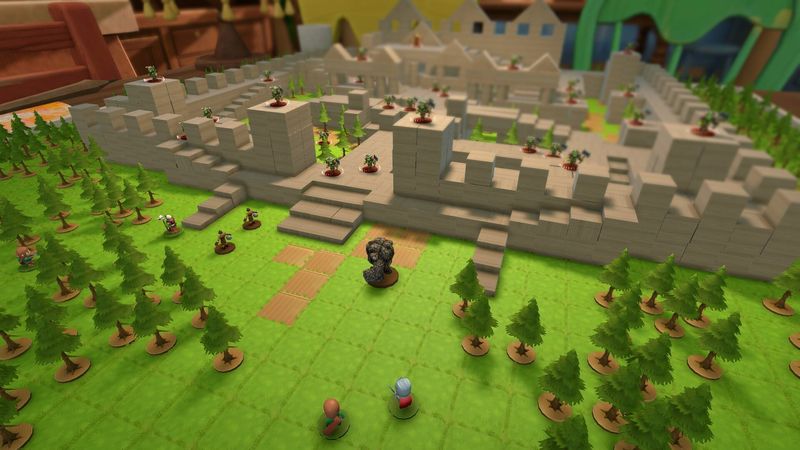
The board is a tabletop covered in collectible miniatures. Archers, catapults, mages, traps, marbles and other things that shouldn't be legal push instead of subtract; they apply actual force until something falls over. That's the whole win condition, and we love it. We haven't played it — we're reading the store page during lunch — and one of us is already sketching angle-of-attack diagrams.
Because weight and shape matter, building a roster is partly about physical properties, which is a lovely sentence. Coins earned through play buy and trade miniatures, so the physics puzzle sits on top of a collection layer that gives you a reason to keep prying open packs. It's the first game in ages we've all agreed to try, sight unseen.
The short version
- You win by knocking the other side's miniatures over, not by draining an HP bar.
- Unit weight, shape, position, and applied force all matter to the outcome.
- Coins support buying and trading miniatures to build your own roster.
Three dads enter
01
Dad Who Skipped the Tutorial
Falling over is the clearest damage number in games.
I have never once understood a hit-point calculation, and now I don't have to. You aim, you push, the thing falls or it doesn't. That's a whole game explained in ten seconds. A lucky ricochet is going to be one of the funniest things I see all year, provided the aiming controls don't fight me.
02
The Descent Guy
Physics makes positioning matter twice over.
I've been asking for this since roughly forever. A unit's tactical role and its physical body both belong in the plan, and the game rewards setup, angle, force and roster construction without hiding the result behind a spreadsheet. If it holds up, the other two aren't going to hear about anything else from me for a month.
03
Normal-ish Dad
This is going to generate arguments.
I clocked it immediately: visible outcomes make the game easy to watch, easy to shout about, and easy to remember afterwards. Provided turns stay brisk, Table Tactics could work as both a solo strategy commitment and a reliable pass-the-controller party pick. I'm already saying words like 'Wednesday.'
Who it is for and what to watch
Invite these people
- Tabletop players who enjoy measuring angles and consequences
- Strategy fans tired of opaque damage formulas
- Game-night groups who like to shout at physics
Dad caveats
- How precise the aiming controls are with small forces
- Whether physics stays consistent across weird unit shapes
- How buying and trading miniatures affects roster balance
Receipts
Not hands-on. Steam page and a PAX Rising Showcase slot, and one of us already quietly planning a group buy.