The thirty-second version
A deckbuilder where dinner service is the boss.
The dinner rush now has spells and cards, and still no clean spoons.
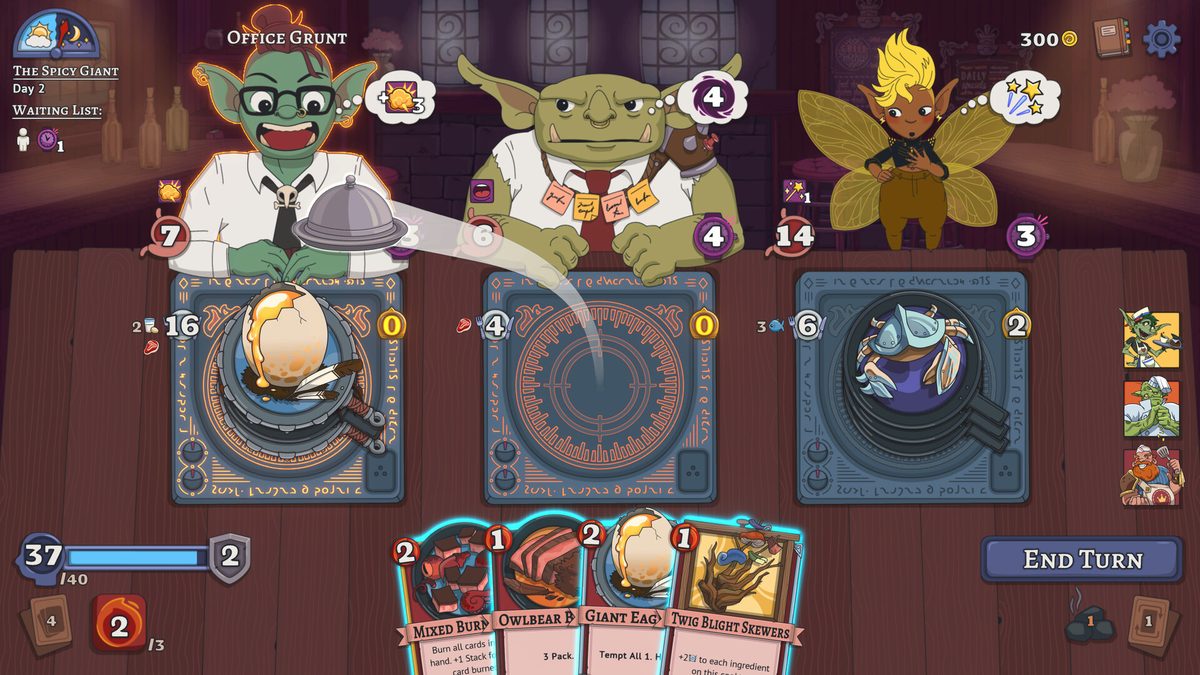
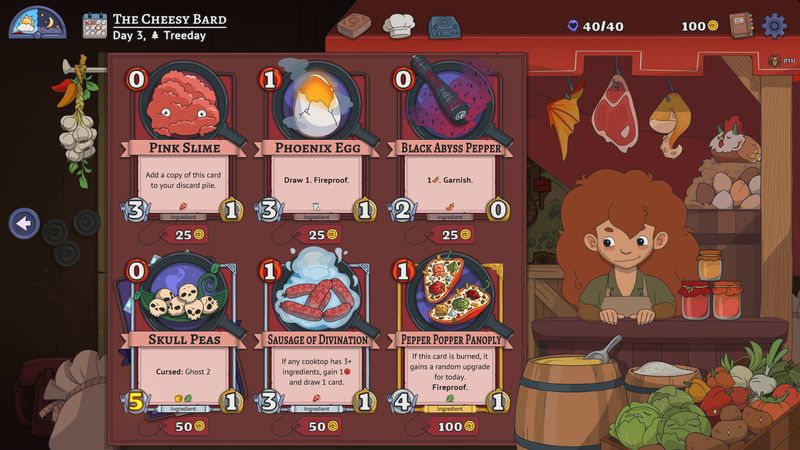
Going purely on the pitch, Arcane Eats gives card play a physical process, which is a rarer thing than it sounds. Ingredients occupy cooktops, tools modify meals, and customers create actual timing pressure. The theme isn't pasted over the deckbuilder; it changes how cards occupy the board and when they become useful.
Okay, what is this thing?
Every parent in the group chat perked up at 'the dinner service is the boss fight.' That is not a subtle hook and we don't need it to be. Ingredient cards move onto enchanted cooktops instead of resolving as abstract attacks, and energy, timing, tools and customer demands compete for attention across a turn. We haven't opened it — this is off the store page — but the specificity is doing plenty.
The result is part deckbuilder, part service puzzle. A good meal isn't only about the strongest combo; it also has to reach the right customer before patience runs out, which is a very fair test of how any evening actually goes. What the trailer promises is that the kitchen tools aren't cosmetic and every run's problem is a slightly different diner from hell.
The short version
- Ingredient cards are played onto enchanted cooktops that hold them for time.
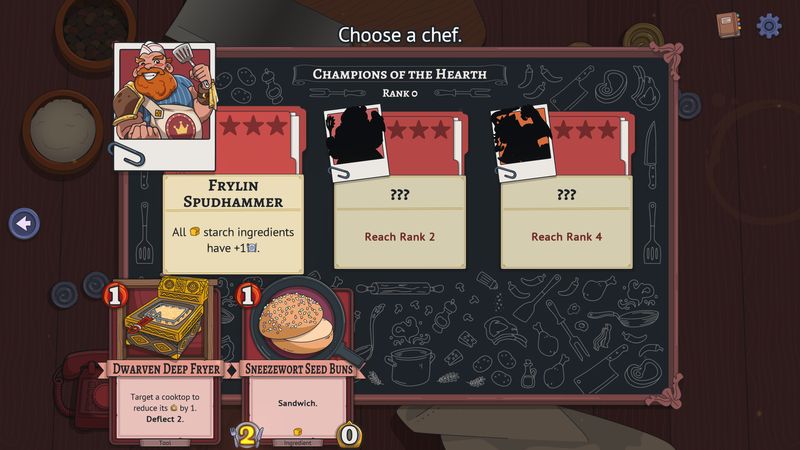
- Magical kitchen tools modify meals and the cards feeding them.
- Customer patience is part of every turn's puzzle, not scenery.
Three dads enter
01
Dad Who Skipped the Tutorial
Cooking makes abstract card timing easier to read.
I've bounced off every deckbuilder that expects me to track eight resources. Cooking, at least, I understand from real life: ingredients need time, customers won't wait, spoons run out. The tooltips still have to keep the magical exceptions from swallowing that basic clarity, but the theme's doing the heaviest lifting a theme can do.
02
The Descent Guy
Cooktop capacity creates the real decisions.
I'm delighted by cards that become occupied ingredients on a board with capacity limits. Sequencing and layout suddenly matter as much as the deck itself, which isn't how deckbuilders usually work. The best decks should solve different service problems in different ways rather than converge on one efficient recipe. If they do, this stays installed on my machine.
03
Normal-ish Dad
A compact service loop is easy to come back to.
I like a game I can pick up between meetings and put down without regret. The familiar deckbuilder rhythm benefits from a theme that visibly changes the board every turn. Run length and customer variety will decide whether it survives the third week or becomes 'that one thing we tried once.'
Who it is for and what to watch
Invite these people
- Deckbuilder fans who want board-state management with weight
- Cooking-game players ready for turn-based dinner rush
- Anyone whose evenings feel like a boss fight already
Dad caveats
- How busy the tooltips get when the magical tools stack up
- Whether customers stay varied across long runs
- Whether winning decks feel meaningfully different from each other
Receipts
No hands-on time. Steam page and a PAX Rising Showcase slot. We are going on vibes and a food pun.